
Review & get 10% off
Review this product and we’ll give you 10% off your next purchase. Write a review →
We offer 10% off your next purchase for every honest review, positive or negative.
Thank you for your review!
Here is 10% off your next purchase:
One use per customer. Cannot be combined with other offers.
We offer 10% off your next purchase for every honest review, positive or negative.
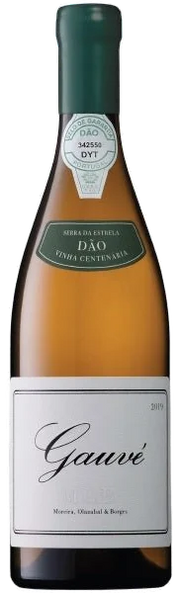
MOB Gauvé Branco 2019/2021
MOB Gauvé Branco 2019/2021 - 2019 is backordered and will ship as soon as it is back in stock.
- Free shippingfrom €80
- Secure paymentSSL · MB Way · card
- Returns14 days
- KlarnaPay in 3, interest-free

MOB Gauvé Branco 2019/2021 - 2019 is backordered and will ship as soon as it is back in stock.
TECH SHEET
Tap any tile to learn more
- Vintage
- Country
- PortugalPortugal
- Region
- Dão
- Type
- White
- Producer
- Moreira Olazabal & Borges
- Grapes
 Old Vines
- Alcohol
- 13.5% vol.
- Bottle
- 750 ml

Vintage
2019
7 years
White wine: fermented without the skins, favouring freshness and aroma.
Region · Portugal
Dão
A granite plateau ringed by mountains in central Portugal. Elegant, long-lived Touriga Nacional reds and refined Encruzado whites.
Type
White
White wine: fermented without the skins, favouring freshness and aroma.
Producer
Moreira Olazabal & Borges
Dão, Portugal
- Region
- Dão, Portugal
- Winemaker
- Jorge Moreira, Francisco Olazabal e Jorge Serôdio Borges
Winemaker
Jorge Moreira, Francisco Olazabal e Jorge Serôdio Borges
- Producer
- Moreira Olazabal & Borges
Grapes
Grapes in this wine
- Old VinesSee wines with Old Vines
Alcohol
13.5% vol.
ABV shows the % of alcohol by volume.
Guide scale for wine — suggestion by style.
Bottle
750 ml
≈ 6 125 ml glasses
Wine profile
Body
This wine: 4 out of 5 — closer to «full».
How heavy and full the wine feels in your mouth — from light like skimmed milk to rich like cream. It comes mainly from alcohol, extract and, in sweet wines, sugar.
Wine profile
Acidity
This wine: 5 out of 5 — closer to «crisp».
The freshness that makes your mouth water, like a squeeze of lemon. It gives a wine tension, length and ageing potential, and makes it great with food.
Wine profile
Alcohol
This wine: 4 out of 5 — closer to «high» (13.5% vol.).
Alcohol brings warmth and body. Still wines usually sit between about 11% and 15% ABV, while fortified wines such as Port sit around 19–20%.
Wine profile
Sweetness
This wine: 1 out of 5 — closer to «dry».
The residual sugar you can taste. EU label guide for still wines: dry up to ~4 g/L, medium-dry up to ~12 g/L, medium-sweet up to ~45 g/L, sweet above that.
Wine profile
White
Tap or hover a scale
Typical: average of 453 whites at Vinogrande
Critics & awards
- Robert ParkerThe Wine Advocate
- Grandes Escolhas20-point scale
Not sure? Ask our AI Sommelier NEW
Pairings, alternatives and advice in seconds
Description
MOB Gauvé 2019 is a white of great personality, the result of the skill of these three renowned Douro winemakers who decided to explore the Dão terroir. With a blend of 60% Encruzado and 40% Bical, it's young and enigmatic on the nose, with notes of minerals, light smoke, moss and an elegant citrus touch.
PalateOn the palate, freshness and tension dominate, reaffirming the mineral profile, with subtle vegetal ‘nuances’ that don't overpower its creaminess. The structure shows vibrant tannins and firm acidity, ensuring excellent potential to develop in bottle. An extraordinary white combining complexity and refinement, promising to unfold even more with time.
The Wine AdvocateRP 95
Review by: Luis Gutiérrez
The Gauvé Branco 2021 was made from grapes from a century-old plot in Gouveia. It has 13% alcohol, a pH of 3.22 and 6.06 g/L acidity. This wine isn't made every year, only in years considered exceptional — so far 2015, 2019 and 2021.
Fermentation took place in wooden vats and stainless steel, with low extraction and low temperatures. It aged in used 500-litre French oak barrels.
At this stage it's extremely young, closed and austere, with a mineral, very balanced profile. It's vibrant and fresh, showing huge potential to develop in bottle. 2,500 bottles were produced. The wine was bottled in June 2023.
Some older vintages were also tasted, in this case 2019 and 2015, which are all the vintages of this wine bottled so far. Both aged for two years in used 500-litre barrels and have 13.5% alcohol. The 2019 has a lower pH, while the 2015 shows higher acidity.
The 2015 is slightly more oxidative and a little heavier, while the 2019 is very complete and perfect for drinking now. Even so, I believe that in the long run the 2021 will be the finest and most distinctive.
M.O.B. stands for Moreira, Olazábal and Borges: Jorge Moreira of Poeira; Francisco “Xito” Olazábal of Quinta do Vale Meão; and Jorge Borges of Pintas, all linked to Douro projects. They're long-time friends who decided to start a joint project to make wine in a different region: the Dão.
They started the project in 2011, almost 15 years ago. They rented Quinta do Corujão, an estate with 11 hectares of vines in Seia, which they bought five years later. They also rented other very old vineyards in Gouveia, at 600 metres. They now produce about 100,000 bottles.
The 2022 and 2023 vintages were quite hot, though the vines suffered more in 2023. 2021 was an extremely balanced, fresh year, and 2024 follows the same trend. M.O.B. usually picks late, about 15 days after most producers, because its vineyards are in cooler areas.
Published: 22 January 2026
What to serve with this wine
Dishes calculated from this wine’s profile, grapes and region.