
Review & get 10% off
Review this product and we’ll give you 10% off your next purchase. Write a review →
We offer 10% off your next purchase for every honest review, positive or negative.
Thank you for your review!
Here is 10% off your next purchase:
One use per customer. Cannot be combined with other offers.
We offer 10% off your next purchase for every honest review, positive or negative.
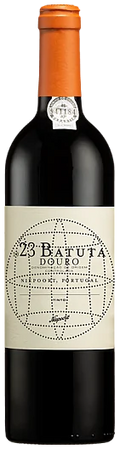
Niepoort Batuta 2023 - Frescura, elegância e mineralidade em perfeita harmonia.
Niepoort Batuta 2023 - Frescura, elegância e mineralidade em perfeita harmonia. - 2023 is backordered and will ship as soon as it is back in stock.
Buy a case of 6 and save 10%
€61.02
per bottle
€406.80
€366.12
case of 6
Discount applied automatically in the cart. Cannot be combined with other codes.
- Free shippingfrom €80
- Secure paymentSSL · MB Way · card
- Returns14 days
- KlarnaPay in 3, interest-free

Niepoort Batuta 2023 - Frescura, elegância e mineralidade em perfeita harmonia. - 2023 is backordered and will ship as soon as it is back in stock.
TECH SHEET
Tap any tile to learn more
- Country
- PortugalPortugal
- Region
- Douro
- Type
- Red
- Producer
- Niepoort Vinhos
- Winemaker
- Dirk Niepoort
- Alcohol
- 12% vol.
- Bottle
- 750 ml


Vintage
2023
3 years
Red wine: fermented on the skins, which give colour, tannin and structure.
Region · Portugal
Douro
Terraced schist valleys along the Douro river, the world’s oldest demarcated wine region (1756). Hot, dry summers give concentrated reds, high-altitude whites and Port.
Type
Red
Red wine: fermented on the skins, which give colour, tannin and structure.


Producer
Niepoort
Douro and Vila Nova de Gaia, Portugal · since 1842
A family Port house since 1842, now in its sixth generation. In 1987 it bought its first Douro estate, Quinta de Nápoles, and Dirk Niepoort began making table wines; Redoma 1991 was the first to be released. It combines tradition with a restless spirit of innovation.
- Founded
- 1842
- Region
- Douro and Vila Nova de Gaia, Portugal
- Winemaker
- Dirk Niepoort
- Signature wines
- Redoma
Winemaker
Dirk Niepoort
Winemaker
Born in 1964, he joined his father Rolf's Port house in 1987 and became the fifth generation to lead Niepoort. That year the family bought Quinta de Nápoles and Dirk began making Douro wines; Redoma 1991 was the first released. In 2023 he was inducted into the Decanter Hall of Fame.
- Producers & estates
- Niepoort
- Notable wines
- Redoma
Grapes
Grapes in this wine
- Malvasia PretaSee wines with Malvasia Preta
- RufeteSee wines with Rufete
- Tinta Roriz
Iberia’s Tempranillo. Red fruit, spice and good structure; takes well to oak.
See wines with Tinta Roriz - Touriga Franca
Widely planted in the Douro. Ripe fruit, floral and rock-rose notes, fine tannins; key in Douro and Port blends.
See wines with Touriga Franca
Alcohol
12% vol.
ABV shows the % of alcohol by volume.
Guide scale for wine — suggestion by style.
Bottle
750 ml
≈ 6 125 ml glasses
Wine profile
Body
This wine: 2 out of 5 — closer to «light».
How heavy and full the wine feels in your mouth — from light like skimmed milk to rich like cream. It comes mainly from alcohol, extract and, in sweet wines, sugar.
Wine profile
Tannin
This wine: 2 out of 5 — closer to «silky».
Tannins come from grape skins, seeds and oak. You feel them as a pleasant drying grip on gums and tongue — from silky and velvety to firm and chewy.
Wine profile
Acidity
This wine: 3 out of 5 — right in the middle.
The freshness that makes your mouth water, like a squeeze of lemon. It gives a wine tension, length and ageing potential, and makes it great with food.
Wine profile
Alcohol
This wine: 2 out of 5 — closer to «low» (12% vol.).
Alcohol brings warmth and body. Still wines usually sit between about 11% and 15% ABV, while fortified wines such as Port sit around 19–20%.
Wine profile
Sweetness
This wine: 1 out of 5 — closer to «dry».
The residual sugar you can taste. EU label guide for still wines: dry up to ~4 g/L, medium-dry up to ~12 g/L, medium-sweet up to ~45 g/L, sweet above that.
Wine profile
Red
Tap or hover a scale
Typical: average of 720 reds at Vinogrande
Critics & awards
- Robert Parker
- James Suckling
Not sure? Ask our AI Sommelier NEW
Pairings, alternatives and advice in seconds
Description
Niepoort Batuta 2023 is a top Douro red created by iconic producer Dirk Niepoort, renowned for its extreme elegance, freshness and minerality-focused profile.
The Wine AdvocateRP 96Reviewed by: Luis Gutiérrez
I'd already had the chance to taste a bottle or two of the 2023 Batuta before this tasting at Niepoort's cellars in Serpa Pinto, Vila Nova de Gaia, and the wine had already made a huge impression on me. It comes from the same two vineyards in Covas do Douro and had four months of maceration/infusion on the skins — but without stems — in concrete vats, followed by 18 months in wood.
This may well be one of the best Batutas ever made (although the team thinks the 2024 could be even better, though I haven't tasted it). It's a deep, ripe, juicy wine, but without any over-ripeness or exuberance. It manages to be seductive and hedonistic at the same time, while keeping a serious, elegant bearing. It shows remarkable precision, supported by extremely fine, polished, elegant tannins.
It has 13.1% alcohol, a pH of 3.57 and 5.2 g/L total acidity. 8,800 bottles were produced and it was bottled in July 2025.
I tasted these wines with Luis Pedro Silva, Niepoort's young winemaker in charge of the Douro wines. Most of the wines shown were from 2024, a less hot year, with lots of foliage and high yields. There was enough rain and the vines behaved as if they had been irrigated. However, the hot summer put them under stress because of the excess canopy and high yields, making it hard to ripen all the grapes and keep the leaves green.
The harvest was very rainy and stretched over a longer period, apparently with positive results: alcohol stayed moderate and the wines kept excellent freshness. At first these conditions favoured the Douro's still wines, though they were less suited to Port. However, the rain revived the vines, allowing the grapes destined for Port to ripen properly too.
The 2024 still wines have low alcohol and seem to be gaining volume as they age. The reds show a very floral profile, perhaps less vibrant than the 2023s, while the whites are similar to the previous vintage, if slightly rounder. About half the reds tasted were from 2023, a cooler year than 2022 with characteristics close to 2021. Both 2023 and 2024 are very approachable, enjoyable vintages from a young age.
As for 2025, it was a year of heavy rain, making vineyard work particularly challenging. Yields were low, but the grapes showed great concentration. After the harvest the rain kept on — far more than would be desirable.
The Ports were tasted with Nick Delaforce, the winemaker in charge of the Vale do Mendiz winery, where Niepoort makes its Ports. The house is releasing different vintages in several categories, but the highlight was the new 2024 Vintage. It's the first general declaration since 2022, as most producers didn't declare a Vintage in 2023.
Niepoort's portfolio differs from that of most major producers: around 60% is special categories and only 40% entry-level wines, when the norm in the sector is the exact opposite. The remaining 1976 Colheita was also bottled, described by Gutiérrez as a truly magical wine.
Published: 16 April 2026.
What to serve with this wine
Dishes calculated from this wine’s profile, grapes and region.